
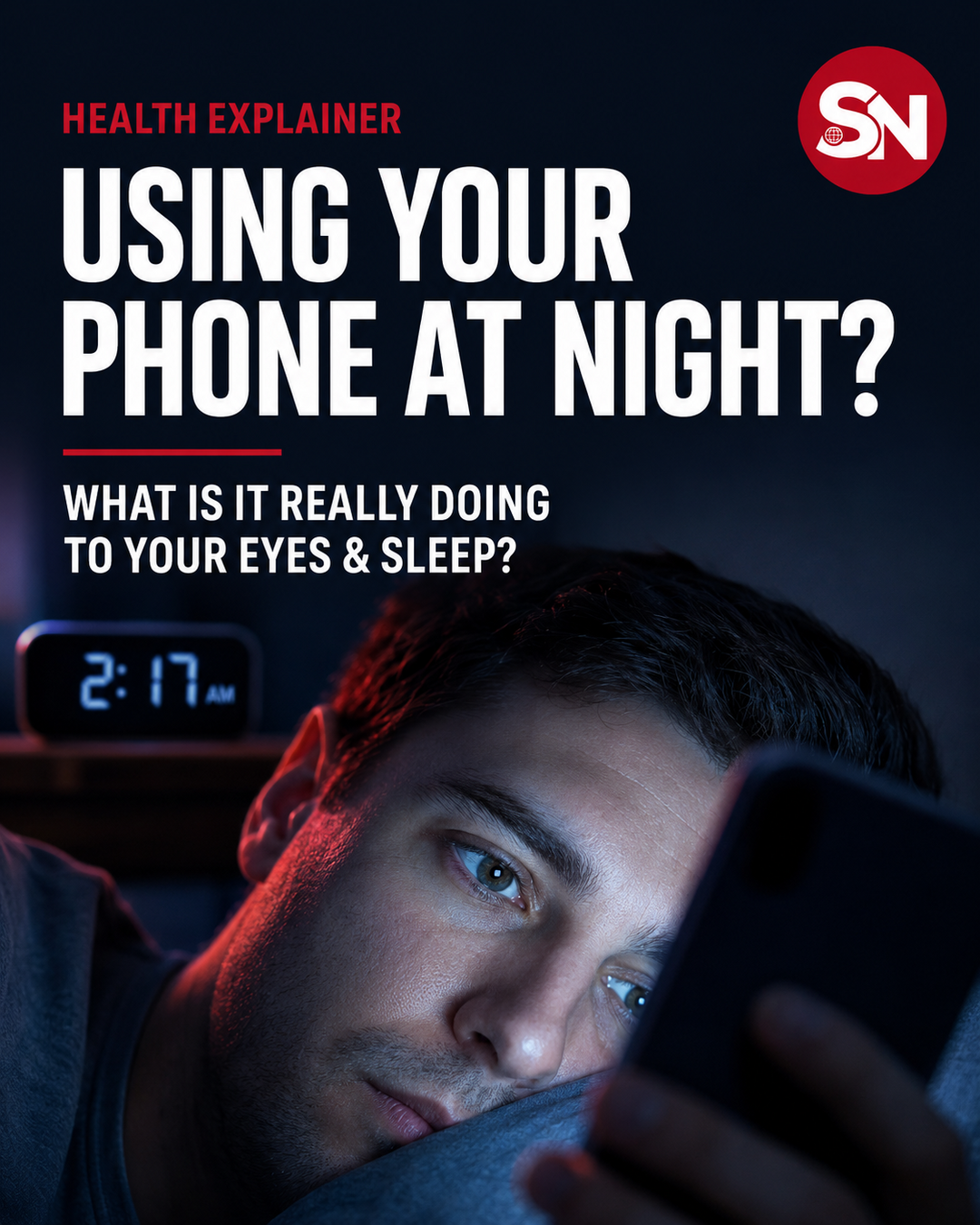
The room is dark. Your phone is only a few inches from your face. You tell yourself you will check one message, but thirty minutes disappear. When your eyes begin to burn and sleep refuses to come, an alarming question feels unavoidable: is the screen quietly damaging your vision?
The evidence gives a less dramatic—but still important—answer. Ordinary smartphone use has not been shown to make healthy eyes suddenly go blind. The most established short-term effects are temporary digital eye strain and disruption of sleep. Both can affect how you feel the next day, and repeated late nights can turn a small habit into a larger health problem.
Digital eye strain can include dry or irritated eyes, blurred vision, headaches and neck or shoulder discomfort. One reason is simple: people tend to blink less while concentrating on a screen. A peer-reviewed review reported that a typical blink rate of roughly 14 to 16 times per minute may fall to about 4 to 6 during screen use. Less blinking allows the tear film covering the eye to dry more quickly.
Darkness can make the experience more uncomfortable because a bright phone creates strong contrast with the room. Holding the screen very close also forces the focusing system of the eyes to work continuously. These effects can feel frightening, but temporary burning, tiredness or brief blur after prolonged use is not the same as permanent retinal damage.
Sleep is where the stronger nighttime warning appears. Light helps the brain decide when to feel alert and when to prepare for sleep. A small randomised laboratory study found that conventional nighttime smartphone light reduced sleepiness and slightly delayed the timing of melatonin compared with a blue-light-reduced display. Melatonin is a hormone involved in the body’s sleep-wake rhythm.
Light is not the only issue. Messages, videos, games and upsetting news can keep the mind alert, while scrolling simply pushes bedtime later. In a four-week randomised pilot involving 38 adults, participants asked to stop using their phones for the final 30 minutes before bed reported falling asleep faster, sleeping longer and experiencing better sleep quality than the control group. The study was small, so it should not be treated as the final word, but its findings support a practical bedtime boundary.
What about Night Shift, Eye Comfort or another warm-colour setting? It may make a screen feel less harsh, but it is not a free pass for unlimited bedtime scrolling. A separate randomised trial found that software reducing a display’s blue-light output did not improve objective or self-reported sleep over one week. Screen brightness, emotional stimulation, notifications and the time taken away from sleep may matter alongside colour.
The most useful response is not panic; it is a better routine. Put the phone away at least 30 to 60 minutes before sleep when possible. CDC/NIOSH guidance for sleep preparation recommends avoiding backlit screens for about an hour and a half before bedtime. A shorter phone-free period is still a sensible starting point if ninety minutes feels unrealistic.
When you must use the phone, keep some gentle room lighting on, lower the brightness to a comfortable level and avoid holding the screen close to your eyes. Use larger text, remember to blink and follow the 20-20-20 rule: every 20 minutes, look at something about 20 feet away for 20 seconds. Turning on Do Not Disturb and charging the phone away from the bed can also remove the temptation to keep checking it.
Persistent eye pain, repeated blurred vision, severe redness, flashes of light, a sudden increase in floaters or any sudden loss of vision should not be blamed automatically on a phone. Those symptoms need prompt assessment by a qualified eye-care professional, and sudden vision loss is an emergency.
The verdict: nighttime phone use is unlikely to be secretly making everyone blind, but it can dry and strain the eyes, delay sleep and leave the brain less rested. The real danger is not a sensational photograph. It is the quiet loss of comfortable vision, good sleep and next-day concentration—one late scroll at a time.
This article provides general health information and is not a diagnosis or personal medical advice. Scandle Wire independently prepared this explainer from public-health guidance and peer-reviewed research; no source text has been copied.