
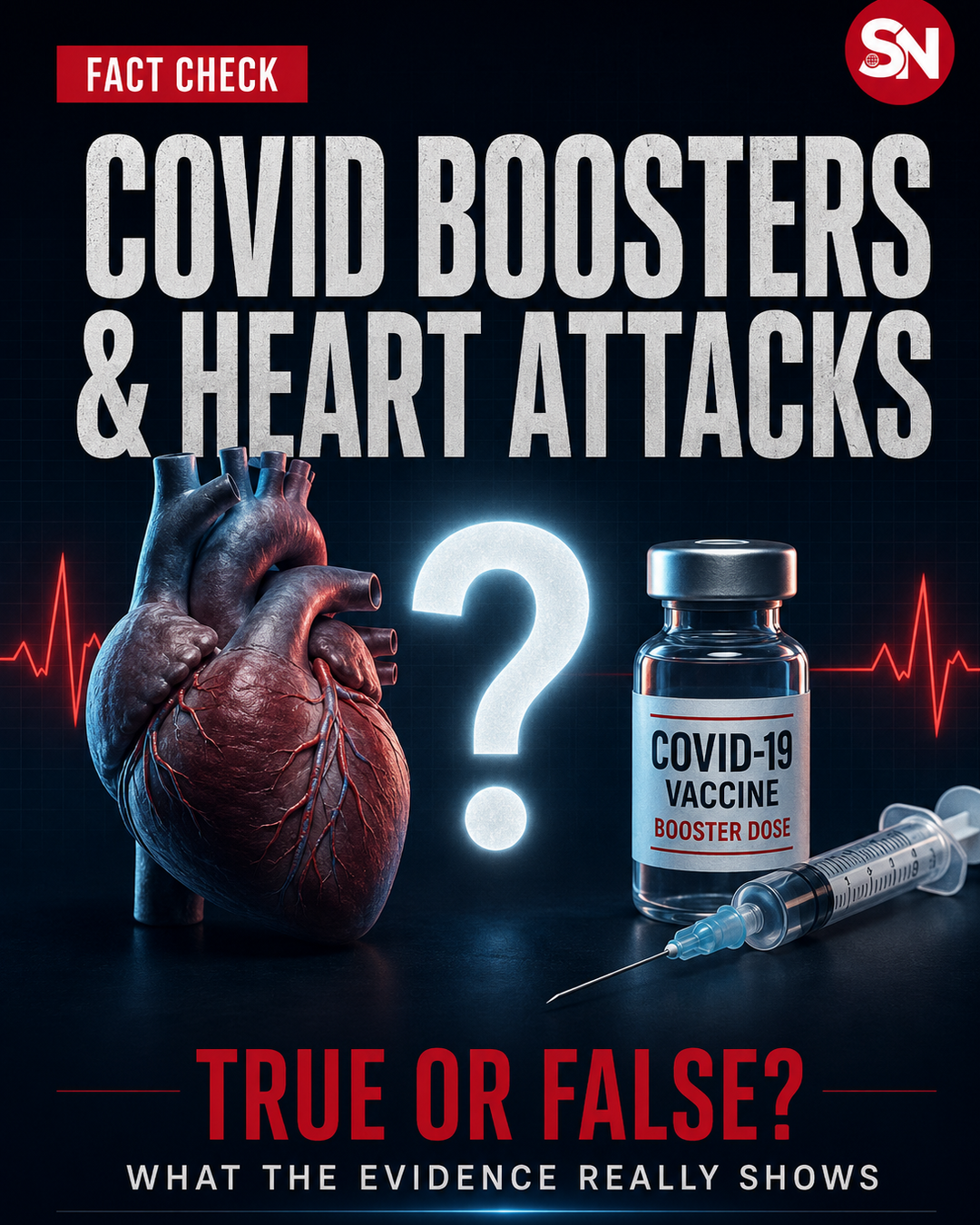
The claim arrives with a frightening warning: people who received a COVID-19 booster are supposedly suffering heart attacks, and anyone vaccinated should expect the same fate. Videos show ambulances, sudden collapses or screenshots of adverse-event databases. The question is emotionally powerful—but does the evidence support it?
The short answer is no. Reliable safety monitoring does not show that everyone who received a booster—or COVID vaccination generally—is developing heart attacks. A heart attack, medically called a myocardial infarction, usually happens when blood flow to part of the heart is blocked. The recognised rare vaccine-related concern is different: myocarditis, an inflammation of the heart muscle, or pericarditis, inflammation of the tissue around it.
That distinction does not mean the safety signal should be dismissed. The CDC, FDA and European Medicines Agency all acknowledge that myocarditis and pericarditis can rarely occur after certain COVID-19 vaccines. Cases have been reported most often in adolescent and young adult males, particularly shortly after an mRNA dose. Symptoms usually begin within several days, and regulators advise seeking medical attention for chest pain, shortness of breath or a racing or pounding heartbeat.
The FDA updated the warnings for Pfizer and Moderna mRNA vaccines in 2025 to provide newer information about this uncommon risk. CDC guidance similarly tells clinicians to consider myocarditis or pericarditis when compatible symptoms develop, especially during the week after vaccination. Someone who develops the condition soon after a dose should discuss any future vaccination with a qualified clinician rather than making the decision from a social-media post.
But rare myocarditis is not evidence of a mass wave of vaccine-caused heart attacks. A cardiovascular safety review presented in the European Heart Journal found no statistically significant difference in myocardial infarction between vaccinated and unvaccinated groups, although it did identify the known increase in myopericarditis. Different studies use different populations and vaccine schedules, so no single percentage applies to every person or every dose.
COVID-19 infection itself also matters. The virus can trigger inflammation, clotting and cardiovascular complications. A large study of health records in England, published in Nature Medicine, found a higher overall risk of myocarditis and several other cardiac outcomes following a positive SARS-CoV-2 test than following vaccination. That does not make every vaccine decision identical; age, sex, medical history, previous reactions and personal risk of severe COVID should all be considered.
Why, then, do online lists contain reports of heart attacks or deaths after vaccination? Systems such as the U.S. Vaccine Adverse Event Reporting System deliberately accept reports of medical events that happen after vaccination, even when nobody knows whether the vaccine caused them. VAERS itself warns that a report cannot establish causation or calculate the true rate of an event. Investigators use those reports as an early-warning signal and then test possible patterns with medical records and controlled studies.
Timing alone can mislead. Millions of vaccinated people already had risk factors such as coronary artery disease, diabetes, smoking, high blood pressure, high cholesterol, obesity or advanced age. In a population that large, some heart attacks will occur after vaccination by coincidence. Establishing cause requires comparing observed cases with the number expected in similar people—not simply counting events that followed a dose.
The responsible verdict is therefore clear: the claim that everyone who received a COVID booster will suffer a heart attack is false. There is a genuine but rare risk of myocarditis or pericarditis after certain vaccines, concentrated in particular groups and usually appearing soon after a dose. It should be communicated honestly, without turning it into a universal prediction unsupported by evidence.
Anyone experiencing new chest pressure or pain, difficulty breathing, fainting, sweating with nausea, or pain spreading to the arm, jaw or back should seek urgent medical care rather than trying to diagnose the cause online. This article provides general information, not personal medical advice. Vaccination decisions and individual heart risks should be discussed with a licensed healthcare professional. Scandle Wire independently prepared this fact check from regulatory guidance and peer-reviewed research.