
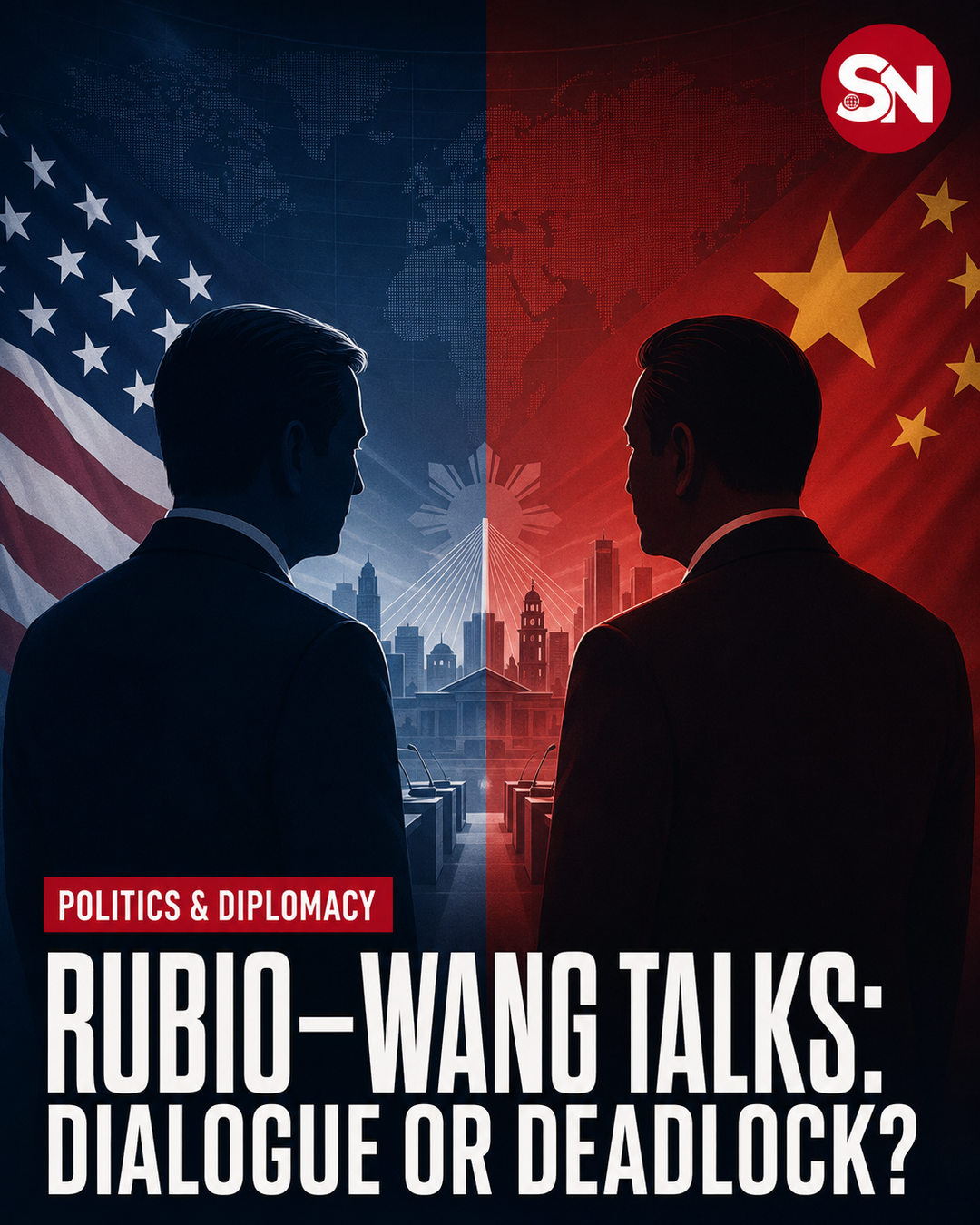
U.S. Secretary of State Marco Rubio and Chinese Foreign Minister Wang Yi have held high-level discussions in Manila as regional leaders confront disputes involving the South China Sea, international trade and the expanding Middle East conflict.
The talks took place alongside an ASEAN-led gathering attended by representatives from Southeast Asian countries and other major powers. Their meeting offered Washington and Beijing an opportunity to keep diplomatic communication open despite continuing disagreements over security, commerce and political influence.
Rubio used the regional meetings to reaffirm American support for allies and partners in the Indo-Pacific. The United States has repeatedly argued that freedom of navigation and respect for international law are essential in the South China Sea, where China, the Philippines and several other governments maintain overlapping claims.
Wang called for cooperation and regional solidarity while criticising actions China considers provocative. Beijing has frequently accused Washington of encouraging confrontation by strengthening military and political relationships with countries that dispute Chinese territorial claims.
Concern has grown following confrontations involving Chinese and Philippine forces. Australia’s foreign minister described the situation as destabilising, according to Reuters. No agreement resolving the underlying territorial disputes was announced following the Rubio-Wang meeting.
The talks also carried broader significance. The United States and China are maintaining a fragile period of engagement while continuing to disagree over technology, trade restrictions, security policy and alleged interference. Any future summit between their leaders would depend partly on whether officials can prevent these disputes from producing a more serious confrontation.
ASEAN governments have strong reasons to avoid being forced into a choice between the two powers. Many depend on China as a major trading partner while also relying on the United States and its allies for security cooperation. That balance makes regional meetings important forums for managing disagreement, even when they produce no headline agreement.
The Middle East crisis added urgency. Rubio addressed the conflict with Iran and the danger facing energy shipments, while Asian governments considered the economic consequences of disruption to Gulf and Red Sea trade routes.
The meeting should not be presented as a breakthrough. Public statements indicated that the two sides remain far apart on several issues, although continued communication may reduce the risk of misunderstanding. Scandle Wire independently prepared this analysis from credited Reuters reporting and publicly available ASEAN information.