
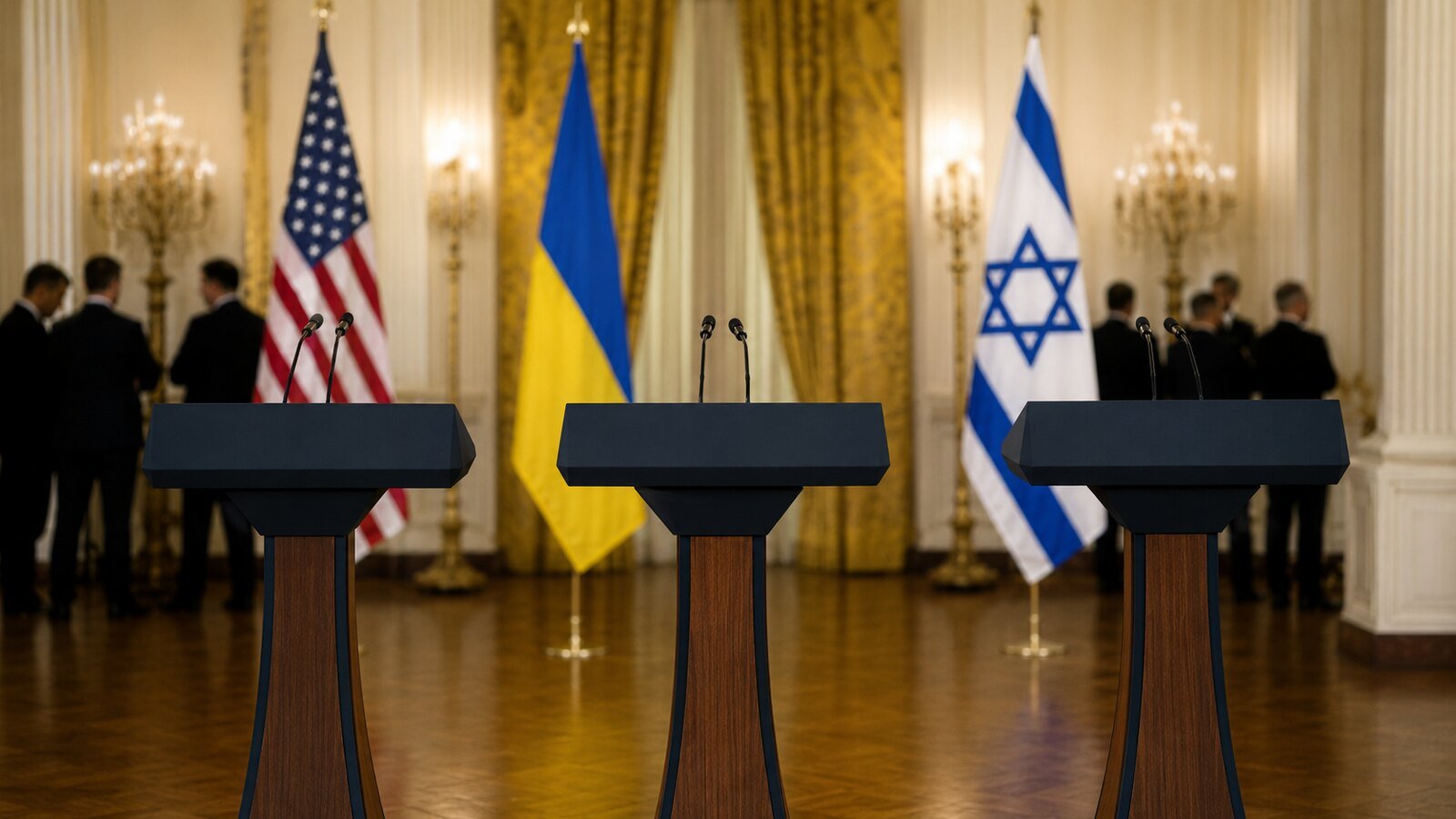
U.S. President Donald Trump is hosting Israeli Prime Minister Benjamin Netanyahu and Ukrainian President Volodymyr Zelenskiy in Washington as the wars involving Iran and Ukraine enter consequential phases.
The meetings bring two different diplomatic relationships into the White House on the same day. Trump’s ties with Zelenskiy have improved after months of friction, while his relationship with Netanyahu faces strains over the direction of the Iran conflict and the risks of deeper U.S. involvement.
Ukraine puts air defence first
Zelenskiy arrived with anti-ballistic defence and broader strategic cooperation at the top of his agenda. Ukraine continues to face regular Russian strikes, making access to Patriot missile interceptors and other defensive systems an urgent priority.
Relations between Trump and Zelenskiy were tense earlier in Trump’s second term, but Reuters reports that they have warmed as Ukrainian forces slowed Russian advances and expanded pressure on Russia’s oil infrastructure.
Iran dominates the Netanyahu agenda
Netanyahu said Iran would be the leading subject in his meeting with Trump. The talks follow a pause in U.S. airstrikes intended to give diplomacy another opportunity, although there is no comprehensive settlement and the regional security situation remains unstable.
The leaders are also expected to discuss Israel-Lebanon tensions and the future of the Abraham Accords. Washington wants to expand the normalisation framework, but Saudi Arabia has linked participation to progress toward Palestinian statehood.
Domestic politics shape the talks
Netanyahu is preparing for an October election and could benefit politically from a public display of support from the U.S. president. At the same time, some of Trump’s supporters oppose a larger American role in the Middle East, creating competing pressure on the White House.
Both visiting leaders are also in Washington for the memorial service of Senator Lindsey Graham, a prominent advocate of U.S. support for Ukraine and a close Trump ally.
What the meetings can realistically deliver
Immediate breakthroughs appear unlikely. For Ukraine, a practical result would be clearer access to air-defence supplies. For Israel, the central question is how the United States balances diplomacy with Iran against security commitments to its regional partners.
The separate meetings underline Washington’s continuing influence over both conflicts. They also reveal the limits of summit diplomacy when military decisions, domestic elections and disagreements among allies remain unresolved.
Source: Reuters. Original Scandle Wire summary and analysis.