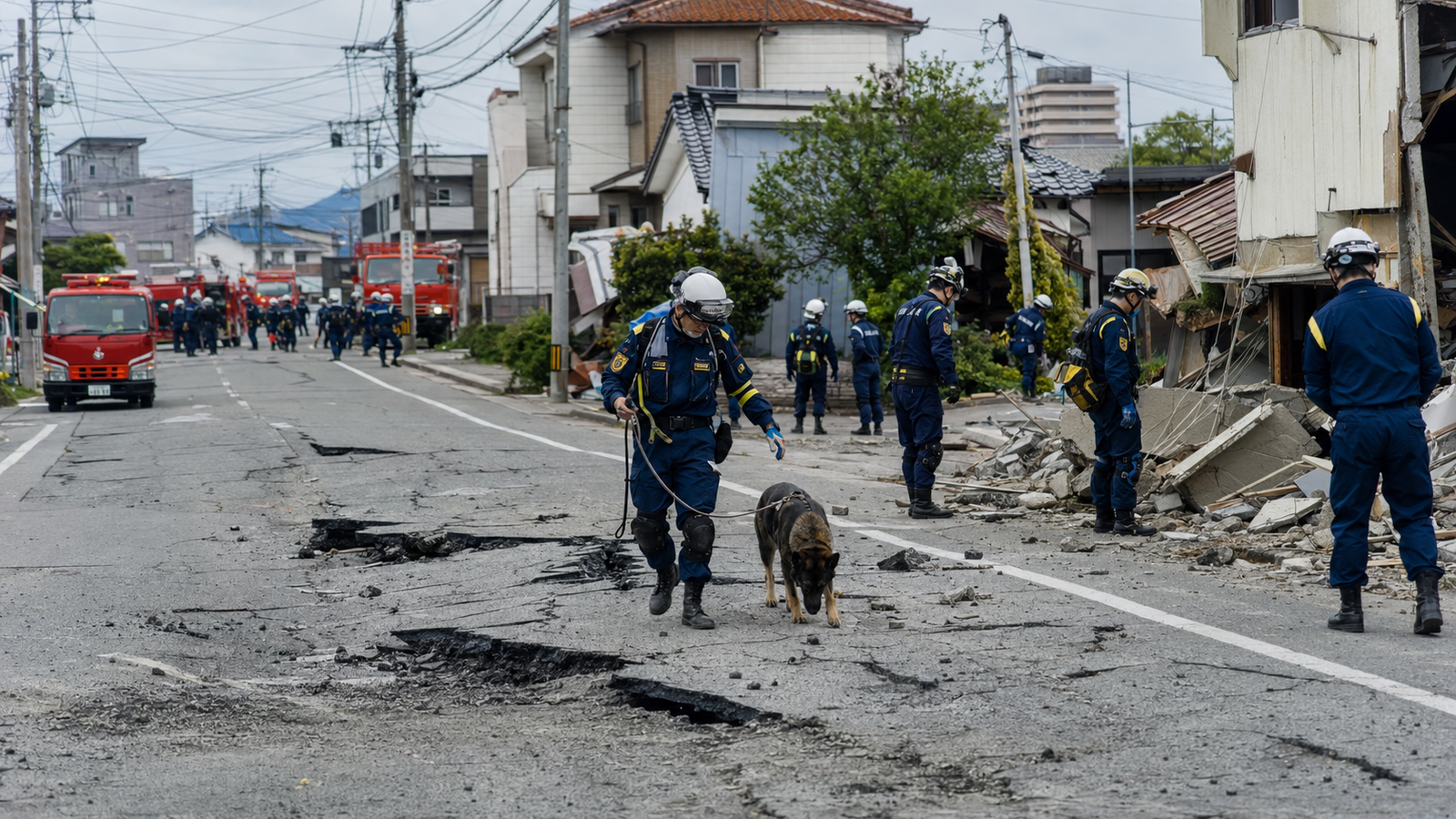
A powerful earthquake in Japan’s southern Kumamoto Prefecture has killed at least 13 people, injured hundreds and left rescue teams searching damaged buildings as strong aftershocks continue.
The magnitude 7.1 earthquake struck Kyushu on Tuesday afternoon at a shallow depth of about 10 kilometres, according to Japan’s weather authorities. It registered the maximum level of seven on Japan’s seismic intensity scale in the hardest-hit areas, triggering a tsunami advisory for the Ariake and Yatsushiro seas and emergency warnings across several prefectures.
Rescue operation expands
Prime Minister Sanae Takaichi described the response as a race against time. Thousands of Self-Defense Forces personnel, aircraft and emergency crews have been deployed while firefighters and specialist teams search collapsed structures and assess fires, landslides and infrastructure damage.
More than 9,000 people were reported displaced, while tens of thousands of households experienced power cuts. Roads, bridges and rail services were disrupted, and officials warned residents to remain alert for further strong shaking. High temperatures and humidity are adding heatstroke risks for people staying in evacuation centres or outdoors.
Industrial disruption
Kumamoto is an important centre for Japan’s semiconductor and automotive industries. Major manufacturers temporarily halted or assessed operations after the quake, including plants connected to Toyota, Honda, Sony and Taiwan Semiconductor Manufacturing Company. The full economic impact will depend on damage inspections and how quickly transport and power supplies are restored.
Authorities said no abnormalities had been reported at nuclear facilities in the region. Japan’s strict earthquake-resistant construction rules appear to have limited the scale of casualties, although the toll could change as searches continue.
A region with painful memories
The disaster has revived memories of the 2016 Kumamoto earthquakes, which killed hundreds directly and indirectly and caused extensive damage to homes, roads and Kumamoto Castle. Restoration work from that event is still ongoing.
Officials are urging residents not to enter unstable buildings, to follow local evacuation instructions and to prepare for aftershocks over the coming days.
This report is based on updates from the Japan Meteorological Agency, Japanese government statements, Reuters, the Associated Press and the Financial Times. The feature image is an editorial reconstruction.
Sources: Japan Meteorological Agency; Reuters; Associated Press; Financial Times.